Your first weeks
Residence-card steps, municipal registration, healthcare, banking, phone service, and transportation depend on status and location.
Living in Spain
Learn the rhythms, local calendars, everyday customs, and practical systems that turn a successful arrival into a life that feels settled.
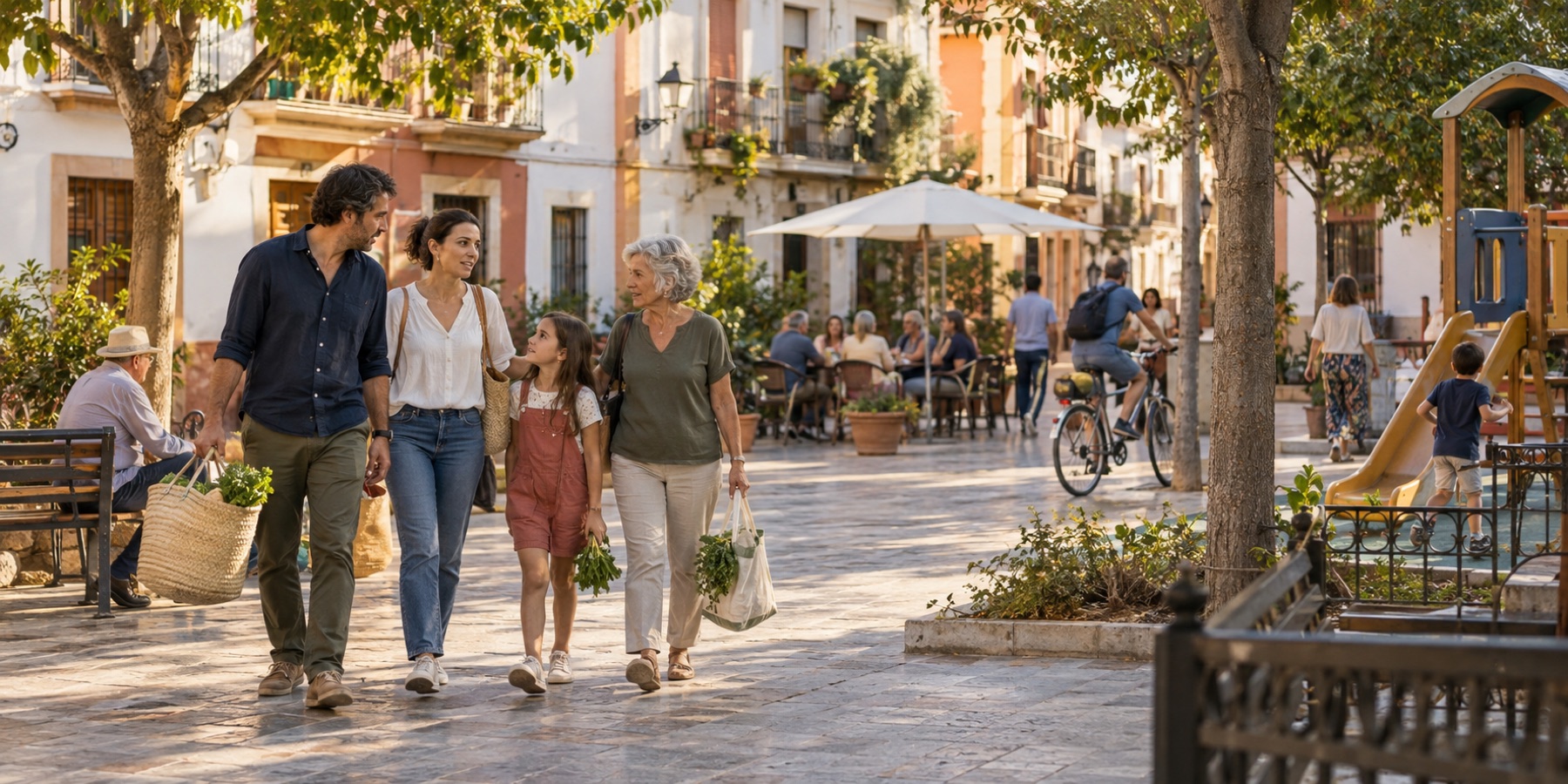
Settling in is built through routines, relationships, and the places you use every week.
A practical path
Residence-card steps, municipal registration, healthcare, banking, phone service, and transportation depend on status and location.
Housing, utilities, schools, childcare, and healthcare involve both formal requirements and local practical choices.
Reliable services, shopping, repairs, activities, and community information save time once the essential paperwork is underway.
Costa del Sol starting points
These are orientation notes, not rankings. Visit in the season you expect to live here, test the actual commute, and verify housing, schools, healthcare, and transport for your household.
Consider it when airport access, rail, museums, city neighborhoods, and a larger year-round service base matter.
Consider it for beach access, airport proximity, commuter rail, and an established international community.
Coastal areas, Arroyo de la Miel, and hillside neighborhoods can offer very different daily routines and transport needs.
Consider it for a compact center, commuter rail, a long seafront, and extensive everyday services.
Mijas Pueblo, Las Lagunas, and coastal areas differ sharply. Confirm which part a listing or housing option actually means.
Consider it for a town setting near Málaga and the airport, while checking car dependence and the exact daily commute.
The coast and its nearby communities cover much more territory. We are beginning with places most relevant to the directory and will add a full comparison only as useful, reviewed local information becomes available.
Your first months
Arrival tasks are not identical for everyone. Your residence status, municipality, autonomous community, employment, family, and housing arrangement determine what applies and where you complete it.
An NIE is an identification number. A TIE is a physical foreigner identity card for people in the situations that require it. The padrón records a municipal address. One does not automatically replace the others.
Ask:Which of these applies to my status, and which office handles it where I live?
Public-healthcare access and the process for obtaining a health card depend on the legal basis for coverage and the responsible autonomous-community health service.
Ask:Do I first need recognition of entitlement, Social Security registration, private coverage, or another document?
Banks and service providers set their own onboarding requirements. Bring the identity, address, income, tax-residence, and contact information the provider requests.
Ask:Can I open or activate this service with my current documents, and what fees or commitments apply?
Validity depends on the issuing country, licence format, residence timing, and whether Spain has an exchange agreement. U.S. licences are not simply converted under a general U.S.–Spain exchange.
Ask:How long can I legally drive, what accompanying permit is required, and will I need Spanish testing?
Daily rhythm and expectations
There is no single Spanish routine, and cities, towns, regions, seasons, and workplaces differ. These patterns help explain what newcomers often notice first.
Restaurants commonly serve lunch during the early-to-mid afternoon, while dinner often begins around 20:00 and can run much later.
Many shops operate continuously, especially in cities and shopping areas. Smaller businesses may close for part of the afternoon, particularly in summer. Check the actual hours instead of assuming.
Sunday remains a common closing day, though tourist areas and larger cities have more exceptions. Appointments, errands, and shopping may require more advance planning.
Language, food, school calendars, festivals, transport, weather, and social habits can feel very different between autonomous communities and municipalities.
Build the life around the paperwork
The administrative checklist gets you started. These everyday choices determine whether the move becomes sustainable, connected, and enjoyable.
Check the exact location, seasonal noise and heat, transport, mobile signal, internet availability, utility setup, building rules, inventory, and who is authorized to rent the property.
Start with appointment, housing, healthcare, school, shopping, and transport vocabulary. Even limited practical Spanish can make daily life more independent.
International communities can ease arrival. Local classes, clubs, volunteering, neighborhood events, and repeated everyday routines help create belonging too.
Excitement, frustration, homesickness, comparison, and growing confidence can coexist. Keep routines, protect relationships back home, and give the new place time to become ordinary.
From information to local help
GO ELMS is building a reviewed Costa del Sol directory from community recommendations, starting with services that movers and residents genuinely use.
Holidays and local celebrations
Public holidays can be national, autonomous-community, and local. Municipal fiestas, Semana Santa, summer ferias, and other celebrations can change business hours, traffic, school schedules, and appointment availability.
Spain’s annual labor calendar allows up to fourteen public holidays, including two local holidays. Check the national calendar, your autonomous community, and your ayuntamiento rather than relying on a generic list.
Confirm whether the relevant office observes a national, regional, or local non-working day.
Look up the municipality’s feria, patron-saint days, school calendar, and seasonal closures.
Local celebrations are one of the easiest ways to understand the place, meet neighbors, and learn community rhythms.
More layers to plan
Not everyone needs every category, but these are common areas where early questions prevent expensive surprises.
Confirm who may rent the property, what the written agreement includes, the inventory and meter readings, which costs you pay, and how deposits and notices are handled.
Enrollment rules, teaching language, calendar, commute, meals, after-school care, and support services can matter as much as the school name.
Entry requirements can involve identification, vaccinations, health certification, timing, an approved entry point, airline rules, and pet-friendly housing.
EU rules for pets arriving from outside the EU ↗Residence, remote work, business activity, investments, property, and worldwide income can create obligations in more than one country.
Spanish Tax Agency: residence criteria ↗Information boundary
General information can help you prepare questions. Personal immigration, tax, legal, financial, healthcare, and school decisions require current information from the responsible authority or a qualified professional.